
One of the first things people notice when they ride in an electric vehicle for the first time is the quiet cabin. There is no engine noise, no piston vibration, and no transmission sound. What remains is little more than the sound of tires rolling on the road and the wind passing outside.
For drivers and passengers, it is a level of comfort that is difficult to fully appreciate until experienced firsthand.
But from another perspective, a reasonable question arises:
If electric vehicles are so quiet, how do pedestrians, cyclists, or motorcyclists know when a vehicle is approaching from behind?
The answer is a technology called AVAS, and understanding it is essential to understanding how electric vehicles maintain safety while delivering a quiet driving experience.
Why EV Silence Raises Safety Considerations
The noise produced by a traditional internal combustion engine, while often considered a nuisance, actually serves an important safety function. It provides information to people around the vehicle about its presence and movement.
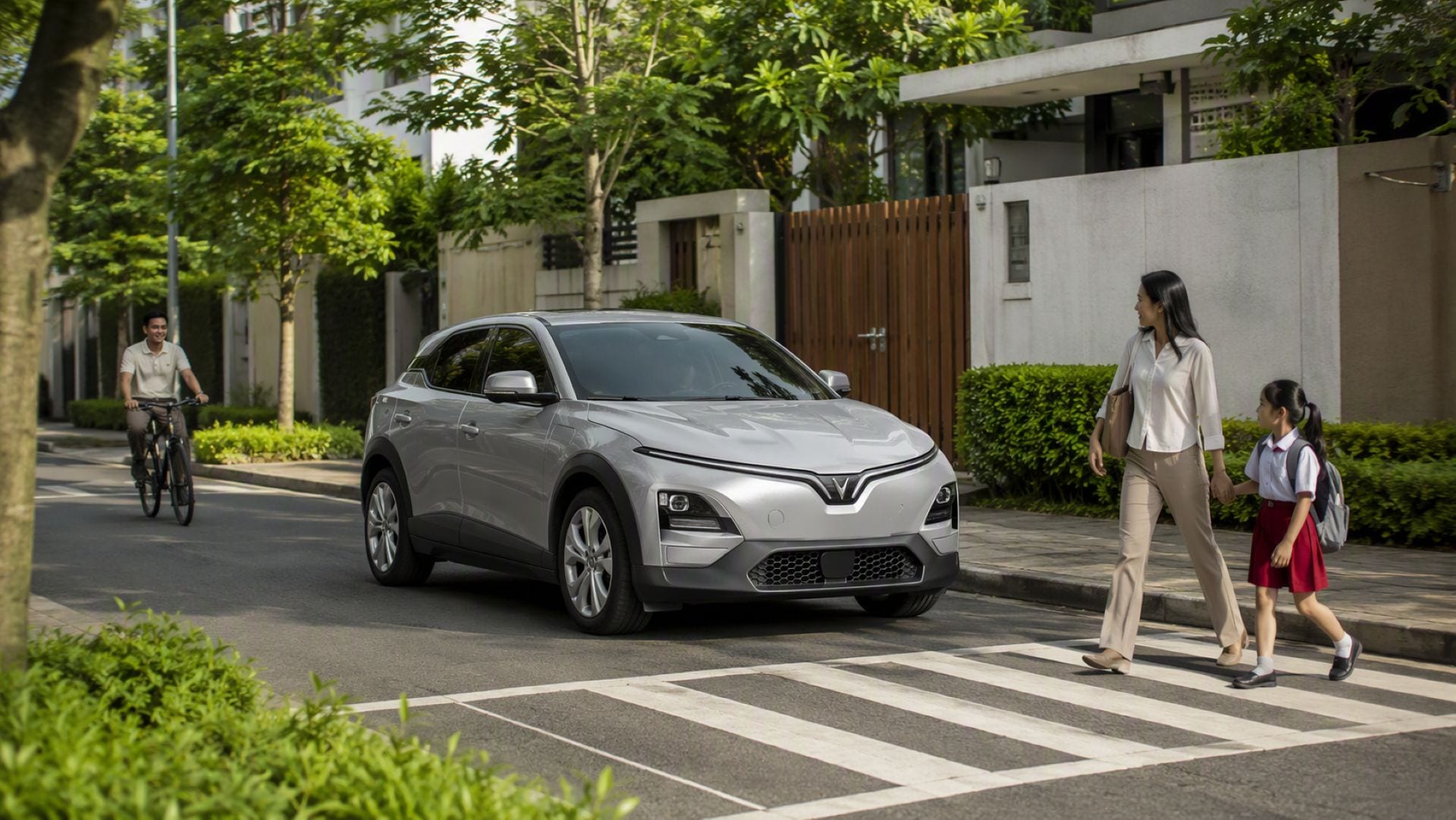
A visually impaired pedestrian walking along a sidewalk, a child stepping out from behind a parked vehicle, or someone crossing a narrow alley often relies on sound to detect an approaching vehicle before seeing it.
Electric vehicles traveling at low speeds generate very little detectable noise. This is where a potential safety gap can arise, and where AVAS comes in.
This is not merely a theoretical concern in Indonesia. Roads across the country involve frequent interaction between vehicles and vulnerable road users, including pedestrians in narrow streets, street vendors, cyclists, motorcycle taxi riders who may stop unexpectedly, and children playing near driveways. In these conditions, AVAS becomes more than a supplementary feature. It is an active safety system with direct relevance to everyday road conditions.
What Is AVAS and How Does It Work?
AVAS stands for Acoustic Vehicle Alerting System. It is a system that automatically generates an artificial sound in electric vehicles to replace the engine noise that EVs naturally do not produce.
Automatically Active at Low Speeds
AVAS is designed to operate automatically at low speeds, generally below 20 km/h, precisely in situations where interaction with pedestrians and vulnerable road users is most likely.
These situations include:
- Parking areas
- Intersections
- Narrow streets and alleys
- Building entrances and exits
- Shared spaces used by both vehicles and pedestrians
At higher speeds, tire noise and wind noise become sufficiently audible to alert people to a vehicle's presence. At that point, AVAS automatically stops generating sound because it is no longer necessary.
Drivers do not need to activate the system manually. It operates continuously in the background whenever required.
The Sound Is Directed Outside, Not Inside
Some people wonder: If the vehicle produces an artificial sound, does that mean the cabin is no longer quiet?"
No. AVAS is designed with the opposite goal.
AVAS speakers are mounted on the exterior of the vehicle, typically near the lower front section, and are directed outward.
The sound is projected into the surrounding environment rather than into the cabin. Drivers and passengers inside the vehicle experience virtually no change in cabin comfort, while pedestrians and other road users receive the acoustic information they need.
This is the key design balance behind AVAS: improving public safety without sacrificing one of the main advantages of electric vehicles, a quiet and comfortable cabin.
Sound That Changes with Speed
AVAS does not simply emit one constant tone.
The system is designed so that both the volume and characteristics of the sound change according to vehicle speed. As the vehicle accelerates within the low-speed range, the AVAS sound adapts accordingly.
This provides more useful information to pedestrians and other road users. They can not only detect the presence of a vehicle but also estimate how quickly it is moving, helping them respond more appropriately.
AVAS Regulations in Indonesia and Around the World
The need for AVAS has been formally recognized by governments and regulatory authorities worldwide.
Globally, AVAS technical requirements are governed by UN Regulation 138, developed by the United Nations and widely adopted as the basis for national regulations.
The European Union became one of the first jurisdictions to mandate AVAS in 2019, followed by the United States in 2020 and Australia in 2025.
In Indonesia, the requirement is established under Minister of Transportation Regulation No. 87 of 2020, which requires electric vehicles to be equipped with a sound-generating system with a maximum sound intensity of 75 decibels.
As a result, AVAS is not merely an optional feature. It is a legal requirement for electric vehicles operating on public roads in Indonesia.
VinFast and AVAS: Safety Built In
All VinFast vehicles sold in Indonesia are equipped with AVAS in accordance with applicable safety requirements.
This means every VinFast vehicle you see on the road already includes an acoustic warning system designed to operate automatically whenever the vehicle is moving at low speeds.
For prospective buyers, this addresses a common question:
"Are electric vehicles safe for people around them, especially in Indonesia's busy traffic conditions?"
The answer lies in a system that works quietly in the background. It is present when needed and unobtrusive when it is not.
The quiet cabin experience you enjoy inside a VinFast vehicle does not come at the expense of the safety of people around the vehicle. Both have been engineered to work together.
FAQ
Can I Hear AVAS from Inside a VinFast Vehicle?
Under normal conditions, AVAS is not significantly audible inside the cabin because the speakers are directed outward. The quiet cabin experience of an electric vehicle remains unaffected.
Does AVAS Need to Be Activated Manually?
No. AVAS operates automatically whenever the vehicle is moving at low speeds. Drivers do not need to take any action.
Are All Electric Vehicles in Indonesia Required to Have AVAS?
Yes. Under Indonesia's Minister of Transportation Regulation No. 87 of 2020, electric vehicles operating in the country must be equipped with a sound-generating system with a maximum sound level of 75 decibels.
Does AVAS Sound Like a Gasoline Engine?
Not necessarily. AVAS sounds vary between manufacturers. Some systems are designed to resemble conventional vehicle sounds, while others use more distinctive and modern tones. The key requirement is that the sound can be detected by nearby road users at low speeds.
Does AVAS Also Work When the Vehicle Is Reversing?
International standards generally require AVAS to operate when a vehicle is reversing at low speeds. This is especially useful in situations such as leaving a parking space or maneuvering in confined areas.
Would you like to experience the quiet cabin of a VinFast electric vehicle firsthand? Free test drives are available at VinFast showrooms across Indonesia. Visit your nearest showroom or call 1500083 to schedule your visit. ⚡🚗